Before You Rent an RV: What First-Timers Wish They’d Known
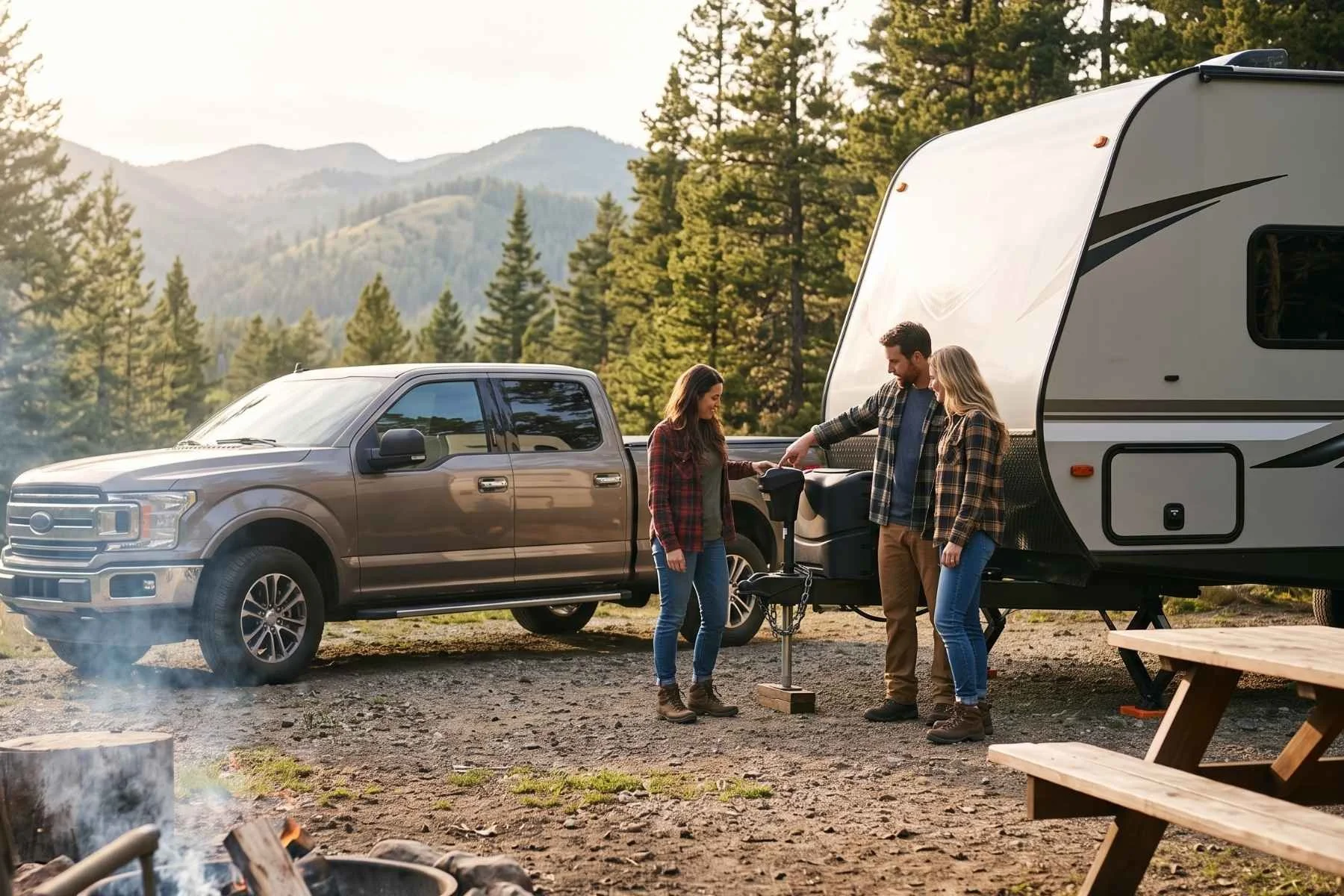
The most important thing to know before you rent an RV is whether your vehicle can actually tow it, because that one detail shapes your budget, your trailer options, and whether you’ll need delivery. Most first-timers start by scrolling floor plans, but the smarter move is to work backward from your truck or SUV’s tow rating. Get that right and everything else, from price to pickup day, falls into place.
How Much Does It Cost to Rent an RV?
Renting a towable RV typically costs $75 to $200 per night, or roughly $500 to $1,400 for a week, before insurance and fees. Small teardrops and pop-ups sit at the low end, family bunkhouse models land in the middle, and larger 5th wheels and toy haulers push toward the top. On top of the nightly rate, budget for insurance, a cleaning fee, generator use if you’ll be off-grid, and a delivery charge if the host brings the trailer to you.
Timing matters as much as trailer size. Summer weekends near national parks are the priciest dates on the calendar, while spring and fall often bring lower rates and easier campsite availability. To get a feel for local pricing, compare listings for RV rentals in San Diego, RV rentals in Phoenix, and RV rentals in Denver.
Check Your Tow Vehicle Before Anything Else
Your tow vehicle’s rating is the number that decides which rentals are even on the table. You’ll find it in your owner’s manual or on the driver’s door jamb sticker, and you should compare it against the trailer’s loaded weight (GVWR), not the lighter “dry weight” some listings show. You’ll also need the right hitch ball size, a working 7-pin wiring connector, and a brake controller for any trailer with electric brakes, which covers most units over about 3,000 pounds.
If you’ve never towed before, Consumer Reports’ guide to safe towing is worth ten minutes of your time before pickup. And if you don’t own a capable truck at all, that’s fine. Many hosts offer delivery, dropping the trailer at your campsite, leveling it, and hooking up utilities so you never tow a mile.
Pick the Right Trailer for Your Trip
The right rental trailer depends on how many people are sleeping in it and where you’re parking it. A teardrop fits two people and is light enough for many midsize SUVs, which makes it an easy entry point; renting a teardrop trailer is simpler than most people expect. A standard travel trailer in the 20- to 30-foot range is the family workhorse, often with a bunkhouse, a full kitchen, and a real bathroom.
A 5th wheel offers the most living space but requires a pickup with a fifth-wheel or gooseneck hitch mounted in the bed, so it’s not an option for SUV owners. Toy haulers only make sense if you’re bringing dirt bikes, ATVs, or e-bikes along. When you search, narrow results by location, dates, and trailer type so you’re only comparing units that fit your plans.
Understand How Insurance Works
Renter protection for a towable RV usually runs $30 to $80 per day, depending on the coverage level you choose and the owner’s stated value of the trailer. Your personal auto policy may extend liability coverage while you tow, but it rarely covers damage to the rental itself, which is the gap that catches people off guard.
If the host delivers and sets up the trailer, you’ll typically need stationary insurance instead, since the unit never moves on the road while it’s in your care. It’s often cheaper than towing coverage. For a deeper look at the common mistakes, read what renters get wrong about RV insurance.
Know What’s Included, Because It Varies by Host
What comes with your rental depends entirely on the host, so never assume a kitchen kit or bedding is part of the deal. Some owners stock everything from pots and pans to camp chairs, sewer hoses, and leveling blocks. Others hand you an empty trailer and a set of keys.
Read the listing carefully, then message the host to confirm anything that matters to you, especially linens, propane, and water hoses. Anything they don’t supply goes on your packing list, and this RV camping essentials checklist for first-timers covers the gaps.
Book Your Campsite Early and Check Length Limits
Campsite availability is often harder to lock down than the trailer itself, especially in peak season. California state parks open reservations six months out through ReserveCalifornia, and popular coastal sites fill within minutes. Private parks like KOA are a reliable backup, with full hookups and pull-through sites that make parking easier for new towers.
Always check the site’s maximum length before you book. Many older state park loops can’t fit rigs much over 30 feet, and that includes your tow vehicle in the total. If you’re still choosing a region, start with the parks in California, the winter-friendly desert routes in Arizona, or the national park circuit in Utah.
What to Expect on Pickup Day
Plan for a 30- to 60-minute walkthrough when you pick up a towable RV, and don’t rush it. The host should show you how to hitch and unhitch, operate the slides and awning, run the water heater and fridge, and empty the tanks. Take timestamped photos of the exterior and interior before you leave so there’s no question about pre-existing damage.
Before hitting the highway, find an empty parking lot and practice backing up and making wide turns for 15 minutes. Check tire pressure, test the brake lights and turn signals, and confirm the safety chains are crossed under the tongue. If this is your first big outing, planning your first RV road trip walks through routing and pacing so day one doesn’t feel overwhelming.
Knowing what to check before you rent an RV turns a nerve-wracking first trip into the easy, memorable one you pictured. Once you’ve sorted your tow rating, budget, and campsite, browse travel trailer rentals on BookRVs.com by location, dates, and trailer type to find one that fits your crew. And if you’re still in planning mode, the BookRVs blog has plenty more first-timer guides to keep you moving.