Planning Your First RV Road Trip? Start Here.
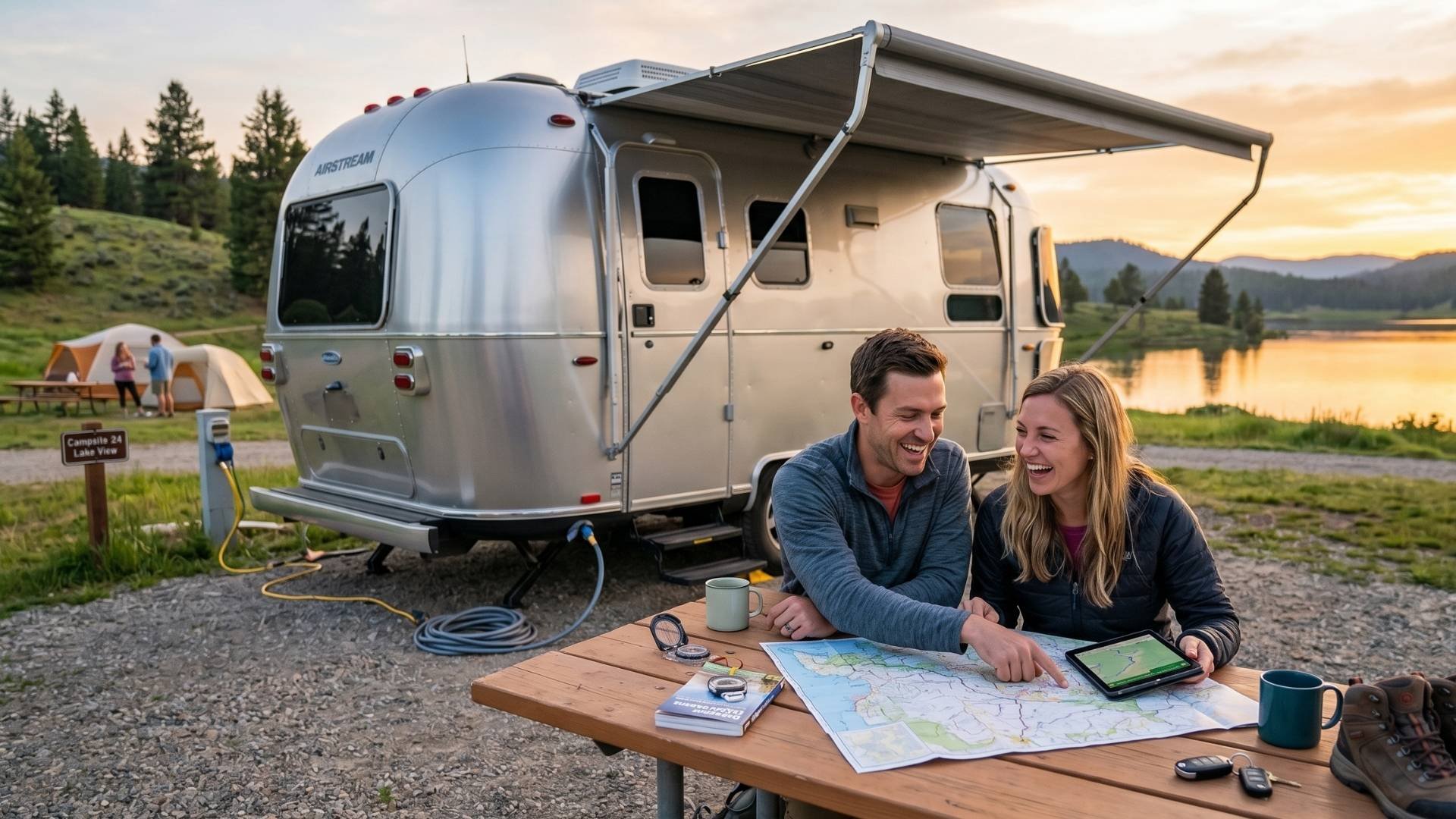
The best RV road trip is the one you actually finish without missed reservations, blown budgets, or the wrong-sized rig. A well-planned trip comes down to six things: route, timing, vehicle, campgrounds, budget, and gear — get those right and the trip mostly runs itself.
Here's how to build a road trip plan that holds up in the real world, from someone who's seen what tends to go wrong.
Start With the Route, Not the Rig
The route shapes everything else — vehicle size, daily mileage, campground type, and how long you'll be gone. Before you book anything, sketch out a rough loop with a clear start and end point, ideally returning to your pickup location to avoid one-way drop-off fees.
A good general rule for first-timers: plan no more than 250–300 miles per driving day, and build in at least one rest day for every three travel days. Trailer towing is more tiring than regular driving, fuel stops take longer, and campground check-ins typically don't start until 2 or 3 PM. If you're aiming for big-mileage destinations, pad your timeline.
For inspiration on routes that actually deliver, The Dyrt maintains strong campground-by-campground itinerary guides, and Roadtrippers is the cleanest tool for mapping out scenic detours and points of interest.
Pick the Right Vehicle for Your Trip Style
Travel trailers are the most flexible option for road trips because they let you unhitch and use the tow vehicle for daily exploration. That matters more than people expect — you don't want to break camp every time you need groceries. A 20 to 25-foot vacation trailer is the sweet spot for most renters: easier to tow than a 30-footer, but with enough space for a couple or small family.
If you're traveling with a larger group or doing long destination stays, a 28 to 32-foot bunkhouse-style trailer makes sense. For gear-heavy adventure trips — bringing dirt bikes, kayaks, or mountain bikes — a toy hauler is the right call. Skip the 5th wheel unless you already own a heavy-duty pickup with a bed-mounted hitch.
A common first-timer mistake is renting too big. Bigger rigs limit which campgrounds you can access, especially at older state parks and national park campgrounds where many sites have length restrictions. Always confirm your tow vehicle's capacity matches the trailer's gross weight before booking — and message the host directly if you have any doubts. Our guide on how to find the best RV rental for your next trip walks through this in more detail.
Book Campgrounds Before You Book Anything Else
Campground availability is the single biggest constraint on an RV trip — bigger than weather, bigger than budget. Popular destinations book out 4 to 6 months in advance, and national park campgrounds open reservations in rolling six-month windows that fill within minutes for peak dates.
Start with Recreation.gov for federal lands (national parks, national forests, BLM sites). Most states run their own systems for state parks — ReserveAmerica aggregates many of them in one searchable database. Private campgrounds — KOA, Jellystone, independent operators — typically have more flexible booking windows and can be filtered through directories like Hipcamp for non-traditional sites or the Good Sam Club's campground network for full-hookup parks.
A practical booking strategy: lock in your two or three "anchor" campgrounds (the ones the trip is built around) first, then fill in connecting nights with private campgrounds, which usually have more availability. Cancellation policies vary widely — read them before you commit.
For inspiration on which states reward road trippers most, our breakdown of the top 5 RV road trip states in the US is a useful starting point. Standouts like Utah and California consistently rank for good reason.
Build a Realistic Budget
A one-week trailer trip for two typically runs $1,500 to $3,000 all-in, depending on rig size, route, and how much you cook versus eat out. Here's how that breaks down:
Trailer rental: $75 to $200+ per night
Campgrounds: $30 to $80 per night (state and national parks on the lower end, full-hookup private parks higher)
Fuel: Towing typically drops your tow vehicle's MPG by 30–40%; budget accordingly based on total miles
Food: $50 to $100 per day depending on whether you cook in the trailer or eat out
Activities and tolls: $200 to $500 per week, highly variable
The biggest hidden cost is fuel. A 1,500-mile trip in a tow vehicle that drops from 22 MPG to 14 MPG while towing burns through gas fast — at $4.50 per gallon, that's roughly $480 in fuel alone. Map total mileage realistically before you commit to a route.
Pack Smart, Not Heavy
Weight matters in a trailer — both for fuel economy and tow safety. The goal is to bring everything you'll genuinely use and nothing you won't.
What hosts include varies significantly. Some rentals come fully stocked with linens, kitchen basics, camp chairs, and outdoor gear; others rent the trailer alone. Confirm exactly what's included before you arrive so you don't double up or end up short. Pet policies also vary — some hosts welcome animals at no extra cost, others charge a fee, and some don't allow pets at all. Always check the listing and message the host with specific questions before booking.
Our Ultimate RV Packing Checklist covers everything from leveling blocks and sewer hose kits to the small kitchen items that constantly get forgotten — worth running through before you load up.
Time the Trip Right
The best road trip months are May, June, September, and early October. Peak summer (July and August) brings the biggest crowds, highest prices, and worst campground availability — and in places like the Southwest, dangerous heat. Shoulder seasons offer better weather, cheaper rates, and far easier reservations.
Regional considerations matter: the Pacific Northwest and northern New England don't really open up until mid-May; Florida, Arizona, and Texas are at their best from October through April. The American Automobile Association (AAA) publishes seasonal travel guidance worth scanning before locking in dates.
If you're heading to a specific city, our location pages for Denver, CO, Las Vegas, NV, and Boston, MA each include seasonal timing notes specific to those regions, along with nearby campground recommendations. State-level pages for Maine and other destinations cover broader trip planning at the regional level.
A great trip starts with the right rig. Browse travel trailer rentals across the country on BookRVs.com to find a setup that fits your route, group size, and budget — many hosts offer delivery directly to your campsite, which can simplify a first-time RV road trip considerably. Reach out to hosts with any questions before booking, and you'll be on the road sooner than you think.