Travel Trailer Rental or Motorhome? How to Pick the Right Rig
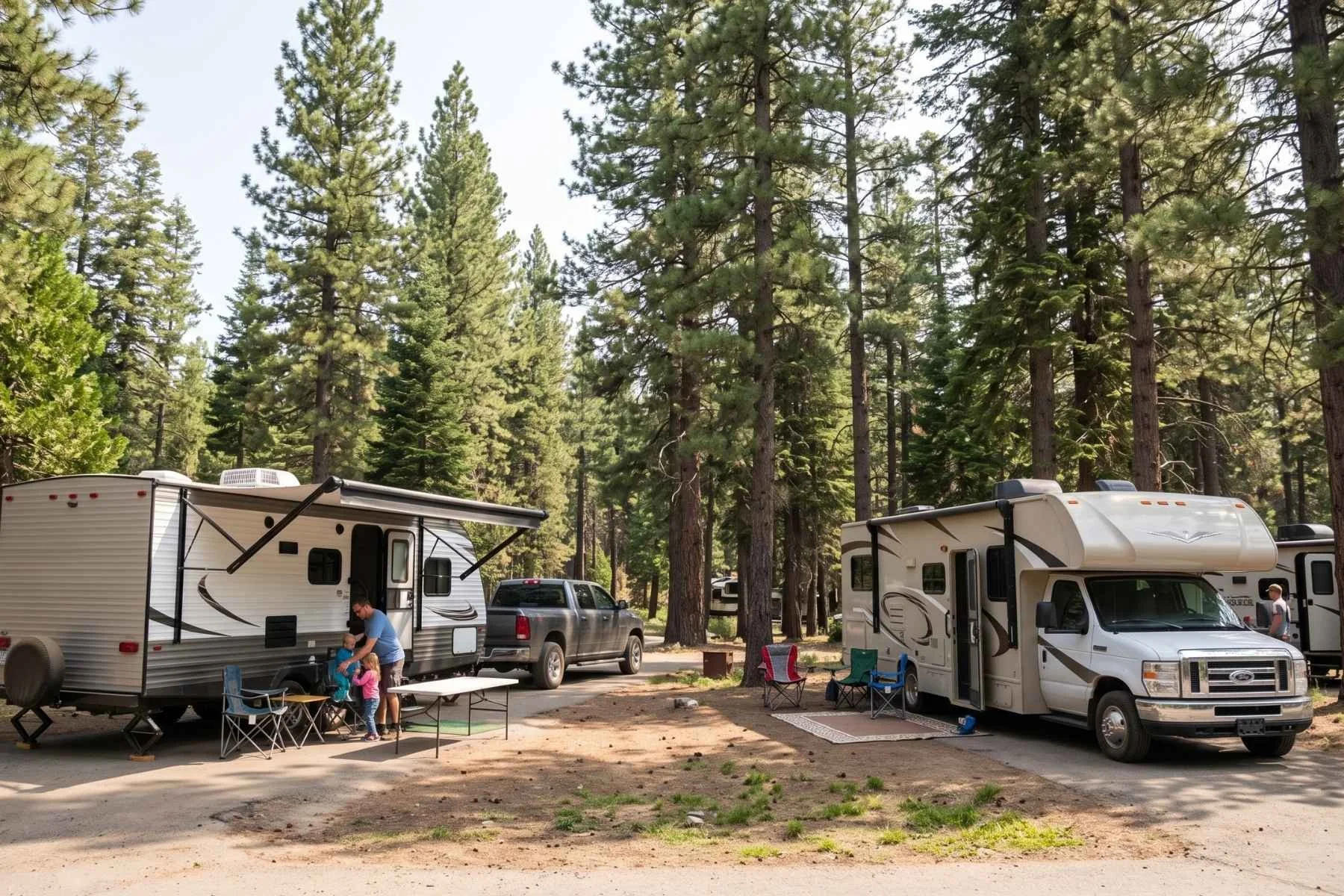
A travel trailer rental usually costs less per night than a motorhome, and with host delivery you may never have to tow it at all. That one detail changes the whole comparison. Here’s how the two stack up on price, driving, space, and the kind of trip each one suits best.
What’s the Difference Between a Travel Trailer Rental and an RV Rental?
A travel trailer is a towable RV with no engine, so it’s either pulled behind your truck or SUV or delivered to your campsite by the host, while a motorhome is a drivable RV where the cab and living space are one vehicle. Technically both are RVs, but when most people search “RV rental,” they mean a motorhome. Those come in two main sizes: Class C models (roughly 21 to 33 feet, with the signature bunk over the cab) and Class A models (bus-style rigs that can stretch past 40 feet).
Towables cover more ground than most renters realize. Standard bumper-pull trailers, teardrops, toy haulers, and 5th wheels all fall under the same umbrella, and each one hitches and handles a little differently. Go RVing has a solid breakdown of every RV class if you want to see floor plans side by side.
How Much Does It Cost to Rent a Travel Trailer vs an RV?
Renting a travel trailer typically runs $75 to $200 per night, while drivable motorhomes usually start around $175 and climb past $400 for a large Class A. The nightly rate is only part of the story, though, and the extras are where the gap really widens.
Mileage and fuel
Motorhome listings usually include 100 to 150 free miles per day, pooled across the trip, with overage charges of $0.25 to $0.75 per mile after that. A towable RV has no mileage fee from the host because your own vehicle is doing the driving. Fuel matters too: most motorhomes get somewhere between 6 and 14 miles per gallon, and they burn that fuel on every grocery run once you’re parked.
Insurance and add-ons
Renter protection generally costs $30 to $80 per day depending on the coverage level and the vehicle’s value. Delivered trailers often qualify for stationary coverage, which tends to be simpler since the trailer isn’t moving on public roads during your stay. Before you book, read up on what travel trailer renters get wrong about RV insurance, because the gaps aren’t always obvious. Generator hours, delivery fees, and cleaning fees vary by host, so check each listing carefully.
Do You Need a Truck to Rent a Travel Trailer?
No, you don’t need a truck if the host offers delivery, because many will drop the trailer at your campsite, level it, and connect the utilities before you arrive. You show up, unload, and start your trip. At the end, the host packs it up and hauls it away. This is easily the most underrated option for first-timers who want the space of a rental trailer without learning to tow.
If you’d rather pull it yourself, your vehicle needs a tow rating above the trailer’s loaded weight, the right hitch and ball size, and in most cases a brake controller. Hosts list the trailer’s weight and hitch requirements, and good ones will walk you through hookup before you leave. Practice a few wide turns and some backing in an empty lot first. It gets easier fast.
Motorhomes skip the hitch entirely. Most can be driven on a standard license, but expect a learning curve on tight gas stations, steep grades, and parking in town.
Which One Is Better for Your Trip?
For most families staying three or more nights in one place, a travel trailer rental is the better value. You set up base camp, unhitch (or have it delivered), and use your own car to explore. That’s a huge advantage at destinations like Yosemite or the Smokies, where you’ll want to drive to trailheads without packing up the whole kitchen.
A motorhome makes more sense when the trip itself is the point: covering long distances, changing campgrounds every night or two, or traveling without a capable tow vehicle. It also works well for groups who don’t want to split up between a car and a camp trailer.
Size limits apply to both. Many national park campgrounds cap sites around 25 to 35 feet, so check the National Park Service page for your park before choosing a bigger rig. State park sites are easy to compare on ReserveAmerica, which lists max lengths for most campsites. If this is your first time out, planning your first RV road trip covers the basics worth sorting out early.
How to Book the Right Rental Trailer
The fastest way to narrow your options is to search by location, dates, and trailer type, then compare a handful of listings side by side. Start with sleeping capacity and length, since those two factors rule out the most listings. Then look at whether the host delivers, how far they’ll travel, and what the fee is.
What’s included varies by host. Some stock linens, a full kitchen kit, and propane, while others expect you to bring your own. Read the listing and message the host with any questions before you request a booking. For a deeper checklist, see how to find the best RV rental for your next trip.
Picking between a travel trailer rental and an RV rental comes down to how you’ll travel: stay put and save with a trailer, or keep moving with a motorhome. If a delivered trailer at a great campsite sounds like your kind of trip, browse the listings on BookRVs.com and find one near where you’re headed.