Toy Hauler Travel Trailers: What They Are and When to Rent One
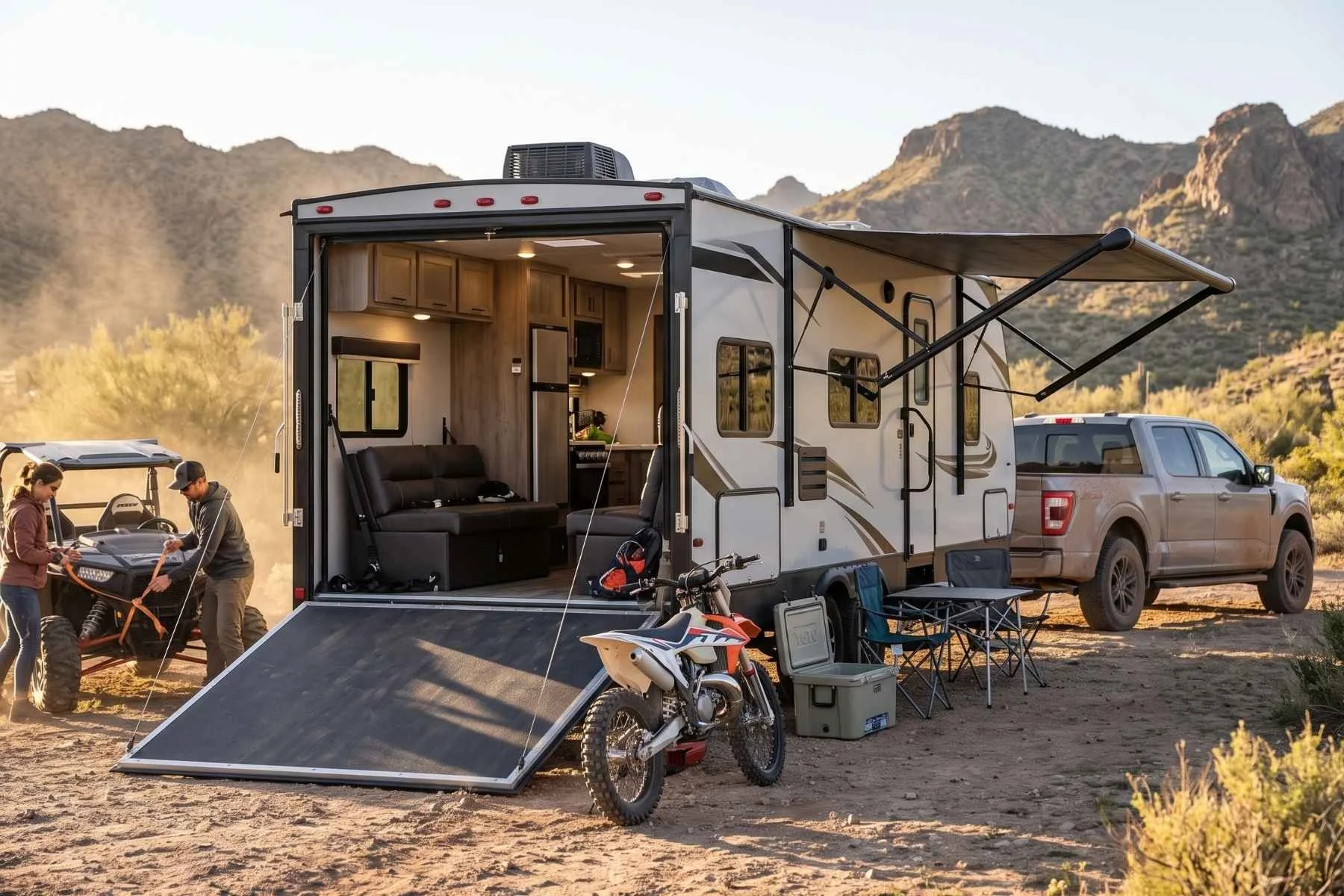
A toy hauler travel trailer is the only kind of RV that lets you sleep, cook, and haul a dirt bike or side-by-side in a single rig. The back wall folds down into a ramp, the garage turns into a lounge or bunk room at night, and you tow the whole thing with a pickup like any other bumper-pull trailer. If your trip involves anything with an engine or two wheels, it’s worth knowing how these work before you book.
What Is a Toy Hauler Travel Trailer?
A toy hauler is a towable RV with a built-in rear garage and a drop-down ramp door, designed to carry ATVs, dirt bikes, UTVs, golf carts, or e-bikes alongside a full living space. The bumper-pull version hitches to a standard ball mount, which separates it from the 5th wheel toy hauler that needs a gooseneck or fifth-wheel hitch in the truck bed. Inside, you’ll usually find a kitchen, a bathroom, a front bedroom, and a garage somewhere between 8 and 14 feet long. Smaller models in the 18 to 24 foot range are often called a small toy hauler camper, and they’re the easiest starting point for first-time renters.
How the Garage Actually Works
The garage is the whole reason these trailers exist, and it’s more flexible than it looks. During travel, toys are strapped to floor-mounted D-rings, commonly rated around 5,000 pounds each. Once you’re parked and unloaded, fold-down sofas or a removable dinette turn the space into extra seating or sleeping, and many units add a drop-down bunk on tracks overhead.
Ramp Patio Decks and Onboard Fuel
Plenty of newer models let the ramp door lock in a level position with railings, turning it into a raised patio deck. Many also carry an onboard fuel tank with a pump, so you can refill bikes and quads at camp without hauling gas cans. Neither feature is standard on every rental trailer, so check the listing if either matters for your trip.
Toy Hauler vs. Standard Travel Trailer
For anyone hauling toys, a bumper-pull toy hauler beats a standard travel trailer plus a separate utility trailer. Towing two trailers behind one truck is restricted in many states, including California, and even where it’s allowed, it’s a hassle on narrow campground roads. The tradeoff is livability. Garage space comes out of the living area, so floor plans feel more utilitarian, with tougher flooring and fewer cozy touches. If nothing on your packing list has a motor, skip the toy hauler and rent a conventional RV with a better layout for similar money. The exception is families who want a garage that doubles as a kids’ bunk room, which works surprisingly well. Our guide on how to find a toy hauler rental near you walks through which floor plans fit which trips.
How Much Does a Toy Hauler Weigh?
A small toy hauler weighs roughly 4,500 to 6,000 pounds dry, while 26 to 30 foot models often land between 7,000 and 9,000 pounds before water, gear, and toys go in. That last part adds up fast, since a side-by-side alone can add 1,500 pounds or more. Before booking, compare the loaded weight against your truck’s tow rating, listed in the owner’s manual or on the door-jamb sticker. Load placement matters too. Because the toys ride at the back, a poorly balanced load can drop tongue weight below the 10 to 15 percent range that keeps a towable RV stable at highway speed. Ask the host how they recommend loading, and if towing feels like too much, look for hosts who offer delivery and drop-off at your campsite.
What It Costs to Rent One
Toy hauler rentals generally run about $100 to $250 per night, with most mid-size units landing between $130 and $200. Holiday weekends near popular riding areas push prices toward the top of that range. What’s included varies by host: some include a generator, ramp railings, or tie-down straps, while others charge extra or leave them out entirely. Plan for renter insurance on top of the nightly rate, typically $30 to $80 per day depending on coverage level. If the trailer will be delivered and parked rather than towed, stationary insurance is often the cheaper option, and our breakdown of what travel trailer renters get wrong about RV insurance covers the details.
Where a Toy Hauler Makes the Most Sense
Toy haulers earn their keep anywhere you can ride, and the Southwest is the center of that world. On the Central Coast, Oceano Dunes SVRA lets you ride sand right next to the Pacific, though off-highway vehicles have to be carried to the riding area before unloading and beach camping is recommended for 4WD vehicles only. That’s why many riders book RV rentals in Pismo Beach and have the trailer delivered to a nearby RV park instead. In California’s far southeast corner, the Imperial Sand Dunes near Glamis draw riders from across the West, reached by Highway 78 east of Brawley or I-8 west of Yuma.
Inland, desert trips out of Las Vegas, Phoenix, and Salt Lake City put you within a few hours of open public land. Statewide options in Nevada, Arizona, and Utah cover everything from slickrock trails to high-desert reservoirs. Before you commit to a specific rig, run through these seven things to check before you rent a toy hauler.
A toy hauler travel trailer is one of the most useful rentals out there once you know what you’re getting: a real garage, a real bed, and one hitch to manage. When you’re ready to try one, browse toy hauler listings on BookRVs.com by location, dates, and trailer type, and find the right fit for your next ride.